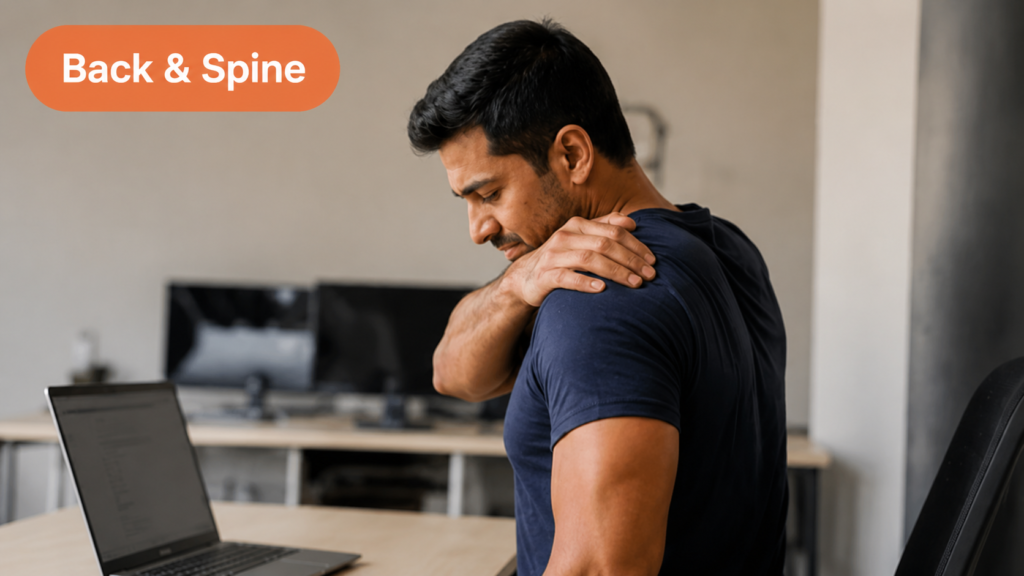
Mid-Back Pain
Mid-back pain can make sitting, twisting, lifting or deep breathing uncomfortable. At Spine & Strength Chiropractic in Craigieburn, we assess the thoracic spine, ribs and surrounding movement patterns to guide suitable care options.
Typical Recovery
Varies by cause, duration and workload
Affected Area
Thoracic spine, ribs and surrounding muscles
Common In
Desk workers, drivers, lifters and active adults
OVERVIEW
Understanding mid-back pain
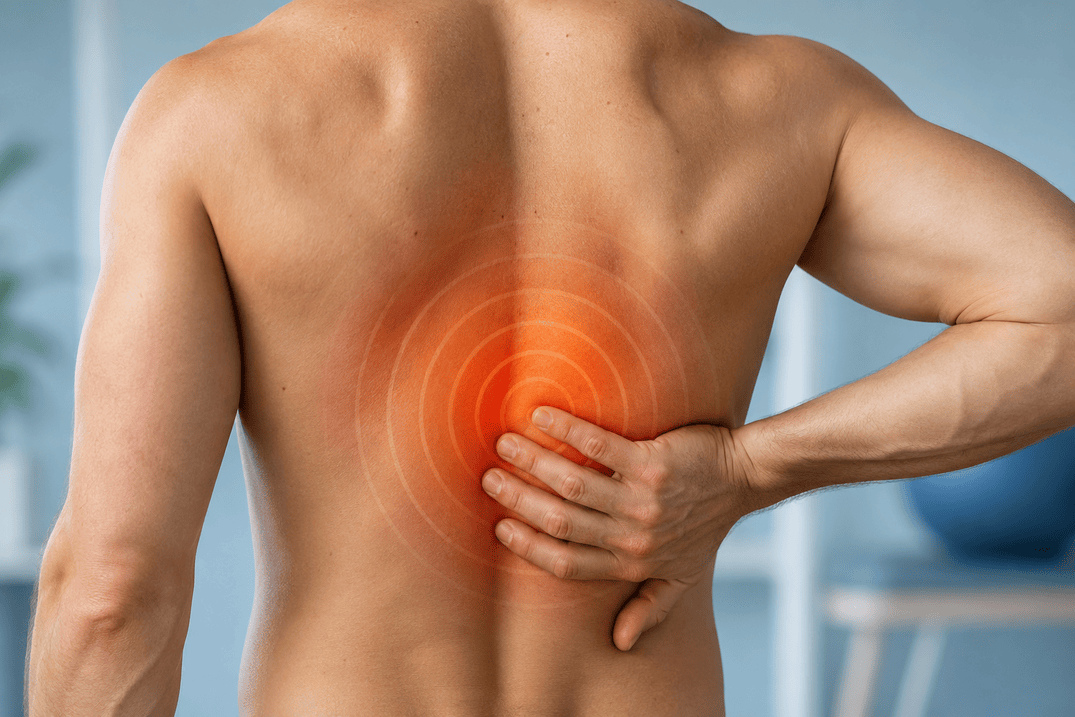
Mid-back pain is commonly felt through the thoracic spine, from below the shoulder blades toward the lower ribs. This region is supported by the rib cage and usually moves less than the neck or lower back. Symptoms may relate to muscular overload, spinal or rib-joint sensitivity, prolonged positions, repeated rotation or a sudden strain. Because chest, breathing and internal conditions can sometimes refer pain to this area, a thorough assessment should consider the complete symptom pattern rather than the painful spot alone.

Thoracic spine, rib and posture assessment

Care selected according to movement and clinical findings
ROOT CAUSE
Where it often begins
The mid-back works closely with the ribs, shoulder blades and trunk muscles. Reduced movement or endurance in one area can increase demand on another.
Thoracic Joints
Restricted or repetitive spinal movement can make local joints sensitive, especially during rotation, extension or prolonged sitting.
Rib & Costovertebral Joints
The joints linking the ribs and spine move with breathing and trunk rotation and may become irritated after strain or repeated loading.
Paraspinal & Intercostal Muscles
Muscles beside the spine and between the ribs may become tense or overloaded through lifting, coughing, sport or sustained posture.
Shoulder-Blade & Trunk Control
Reduced endurance around the shoulder blades and trunk can change how load is managed during reaching, carrying and upper-body work.
WHAT TO WATCH FOR
Symptoms & common causes
Symptoms to look out for
- Aching, tightness or sharp pain through the middle back
- Stiffness when twisting, extending or reaching
- Tenderness beside the spine or around the ribs
- Discomfort after prolonged sitting, driving or standing
- Pain that changes with a deep breath, cough or certain movements
Common causes
- Long periods at a desk, in a vehicle or in a fixed position
- Sudden twisting, lifting or reaching movements
- Repeated upper-body training or work above shoulder height
- Reduced thoracic mobility or shoulder-blade endurance
- Coughing, respiratory strain or irritation around the rib joints
- Less commonly, fracture, inflammatory disease or referred pain from another condition
TREATMENT
How we may support it
At Spine & Strength Chiropractic, Craigieburn, management begins with screening the thoracic spine, ribs, shoulders and relevant medical warning signs.
- Gentle joint and soft-tissue techniques where clinically appropriate
- Thoracic mobility and controlled rotation exercises
- Strengthening for shoulder-blade, trunk and postural endurance
- Workstation, driving, lifting and movement-break advice
- A progressive return to gym, sport or physically demanding tasks

SHOULD YOU GET ASSESSED?
Signs you may benefit from an assessment
- Pain is worsening, persistent or limiting movement
- Symptoms began after a fall, collision or significant impact
- Pain occurs with deep breathing or is associated with chest symptoms
- There is unexplained fever, weight loss or severe night pain
- The same area repeatedly becomes painful during work or exercise
Mid-back pain can sometimes need medical review
Seek urgent medical care for chest pressure, shortness of breath, faintness, sudden severe pain, new limb weakness, or loss of bladder or bowel control. See a doctor promptly for fever, unexplained weight loss, significant trauma or pain that does not behave like a musculoskeletal problem.
YOUR JURNEY
Our 4-step care plan
We assess the thoracic spine in context, including breathing, rib movement, shoulder function and the daily tasks that provoke or ease your symptoms.
Consultation
We discuss the onset, location, breathing symptoms, work setup, exercise demands and relevant medical history.
Physical Assessment
We assess thoracic and rib movement, posture, shoulder function, strength and symptom response to specific tasks.
Findings & Explanation
We explain likely musculoskeletal contributors and advise whether medical review or imaging should be considered.
Personalised Care Plan
Your plan may include hands-on care, mobility work, strengthening and practical changes to daily loading.
FAQ
Frequently asked questions
What is the difference between mid-back and upper-back pain?
Mid-back pain usually refers to the central or lower thoracic region. Upper-back pain is often felt closer to the shoulder blades and base of the neck.
Why does my mid-back hurt when I take a deep breath?
Breathing moves the ribs and their joints. Musculoskeletal irritation can be painful, but new breathing difficulty, chest pressure or severe symptoms require medical assessment.
Can sitting posture contribute to mid-back pain?
Long periods without changing position can increase fatigue and sensitivity. Movement variety, workstation changes and improved endurance may be more helpful than trying to hold one perfect posture.
Will I need an X-ray for mid-back pain?
Not necessarily. Imaging is considered when the history, trauma, age, examination or warning signs suggest it may help guide care.
Can mid-back pain return after it improves?
Yes, particularly when the original workload or movement demands remain unchanged. A graded strength and mobility plan may improve tolerance over time.
Book a mid-back pain assessment in Craigieburn
Visit Spine & Strength Chiropractic in Craigieburn for an assessment of your thoracic movement, symptoms and daily
demands.