Headaches
Headaches can have many causes and should not automatically be assumed to come from the neck. At Spine & Strength Chiropractic in Craigieburn, we assess neck movement, muscle tension, jaw function and other musculoskeletal factors that may be relevant, while identifying signs that need medical review
Typical Recovery
Varies by headache type, trigger and health factors
Affected Area
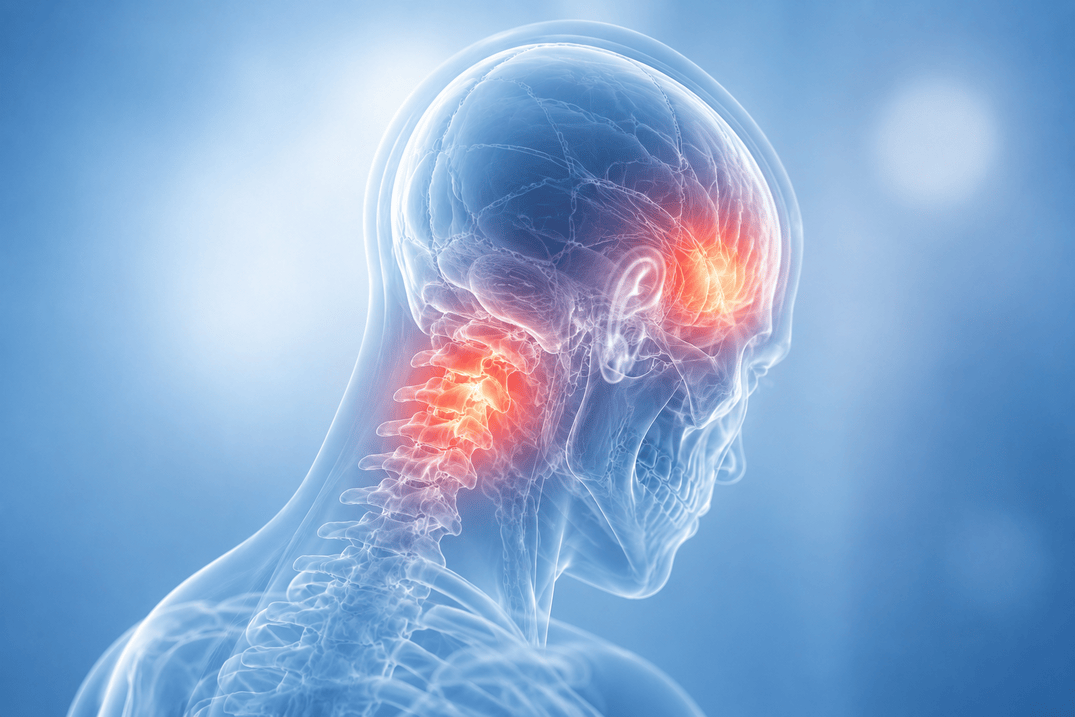
Head, temples, base of skull, neck or face
Common In
People with recurring episodes, neck tension or screen-related symptoms
OVERVIEW
Understanding headaches
A headache is pain or pressure felt in any part of the head. Common patterns include tension-type headache and migraine, while headaches may also be linked to illness, eye strain, dental concerns, medication use or a problem affecting the neck. The location of pain alone does not confirm the cause. A useful assessment considers how the headache began, how often it occurs, associated symptoms, medical history and whether neck movement or sustained positions change the pattern.
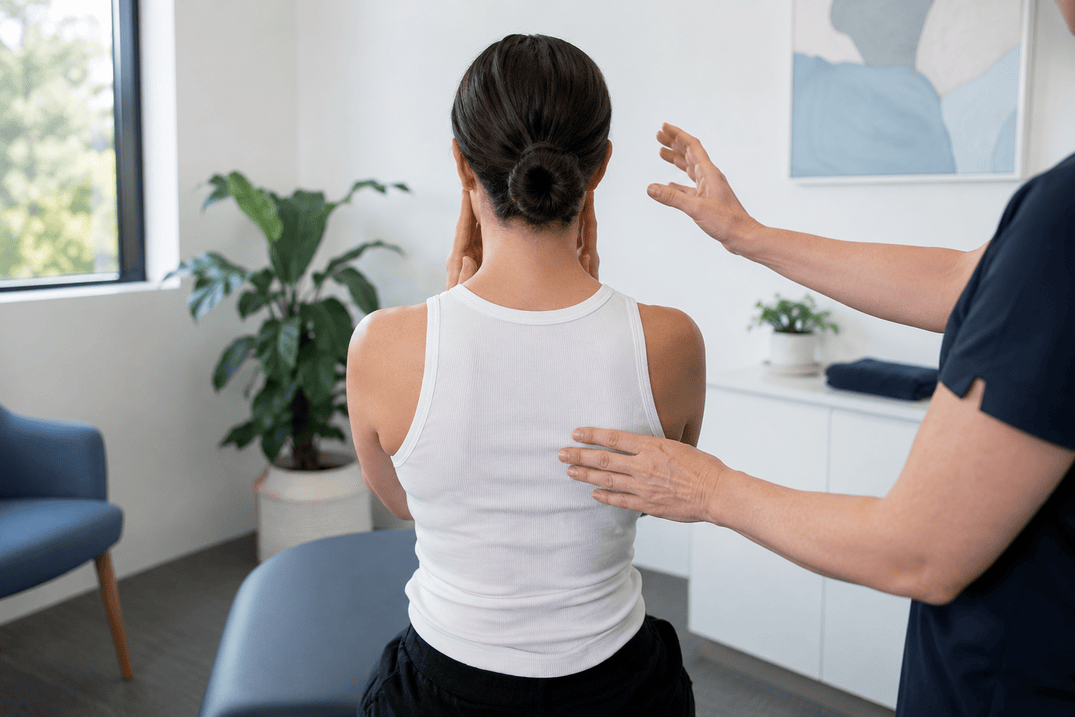
Neck movement and neurological screening
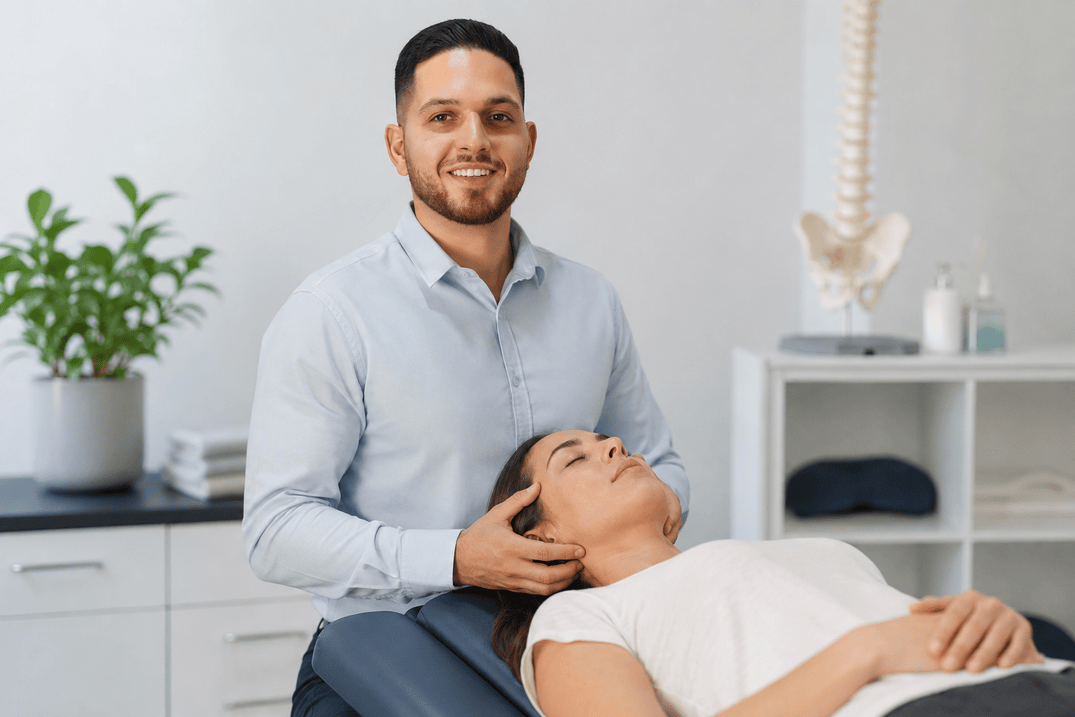
Personalised exercise and movement guidance
POSSIBLE CONTRIBUTORS
What may be involved
Headaches are not all the same. Several factors may overlap, and a musculoskeletal assessment is only one part of deciding what care or referral is appropriate.
Neck Joints & Muscles
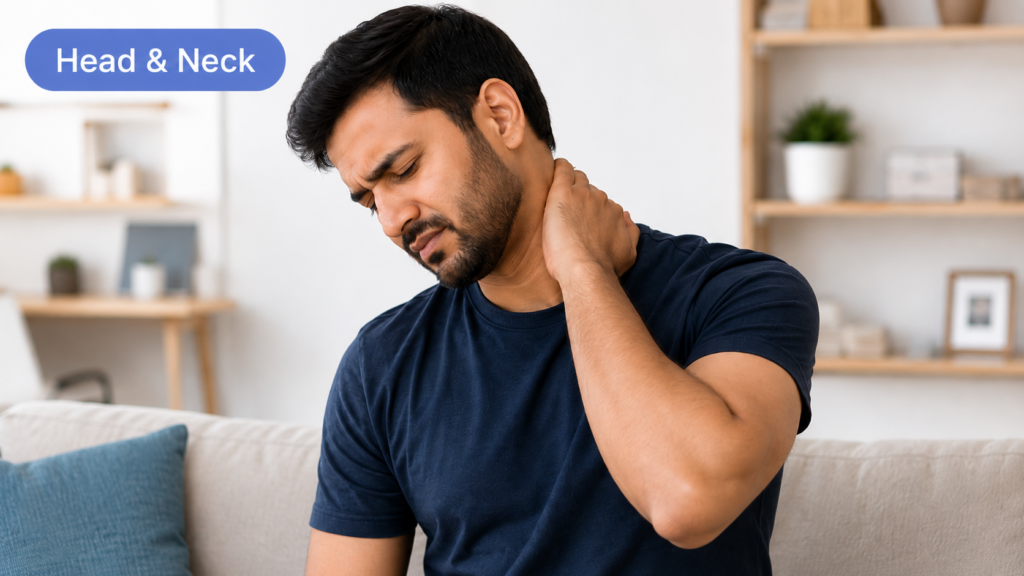
Reduced neck movement, muscle guarding or sensitivity near the upper neck may be associated with some headache patterns, particularly when symptoms change with neck movement.
Jaw & Temple Muscles
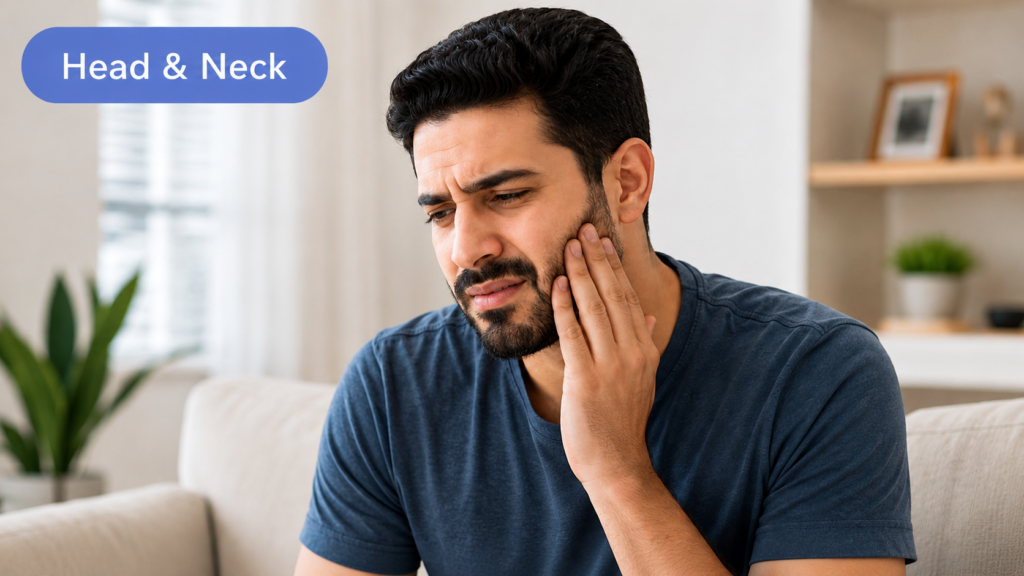
Clenching, grinding or prolonged jaw tension can overload the muscles around the temples, cheeks and jaw and may occur alongside headache symptoms.
Screen & Visual Demand
Long periods of close visual work, limited movement and eye strain can contribute to head, neck and shoulder discomfort.
Health & Lifestyle Factors
Sleep disruption, stress, dehydration, illness, medicines and other health factors can influence headaches and may require GP, pharmacist, dental or optometry advice.
WHAT TO WATCH FOR
Symptoms & common causes
Symptoms to look out for
- Pressure, tightness, throbbing or aching in the head
- Pain around the temples, forehead or base of the skull
- Neck stiffness or shoulder tension occurring with the headache
- Symptoms that change with neck movement, desk work or prolonged positions
- Recurring episodes that affect concentration, sleep, work or exercise
Common causes
- Tension-type headache or migraine
- Neck-related referred pain or muscular tension
- Jaw clenching, teeth grinding or dental concerns
- Eye strain, prolonged screen use or visual problems
- Illness, sinus problems, medication effects or dehydration
- Less commonly, a serious neurological, vascular or infectious condition
TREATMENT
How we may support it
At Spine & Strength Chiropractic, Craigieburn, care is considered only after the headache pattern has been assessed. When findings suggest a relevant neck, jaw or movement component, support may be provided alongside appropriate medical care.
- Education about the headache pattern, aggravating factors and safe self-management
- Gentle neck or upper-back care where clinically appropriate and well tolerated
- Mobility and strengthening exercises for the neck and shoulder region
- Advice on movement breaks, screen setup, pacing and sleep positioning
- Referral to a GP, dentist, optometrist or emergency care when symptoms fall outside a musculoskeletal presentation
SHOULD YOU GET ASSESSED?
Signs you may benefit from an assessment
- Headaches are recurring, becoming more frequent or changing in character
- Neck stiffness, jaw tension or shoulder discomfort occurs with episodes
- Headaches affect work, sleep, exercise or normal daily activity
- You are using pain medicine frequently or are unsure what type of headache you have
- Symptoms began after an injury or are accompanied by dizziness, visual or neurological changes
Know when a headache needs urgent care
Call 000 for a sudden severe headache, headache with weakness, facial droop, confusion, seizure, fainting or loss of vision. Seek urgent medical care after a significant head injury, or when headache occurs with fever and a stiff neck, persistent vomiting, pregnancy or the early post-partum period, or a rapidly worsening pattern.
YOUR JURNEY
Our 4-step care plan
The first priority is to understand the headache pattern and decide whether a musculoskeletal assessment is suitable or medical referral should come first.
Consultation
We discuss onset, frequency, location, triggers, associated symptoms, medicines, medical history and how the headaches affect your day.
Physical Assessment
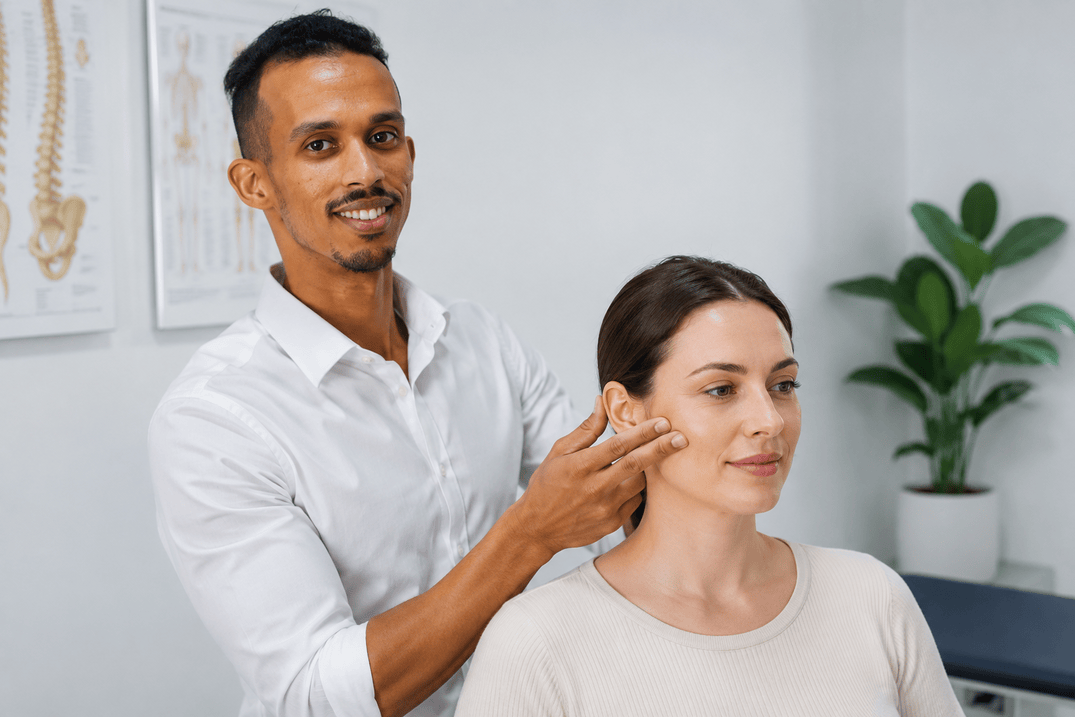
Where appropriate, we assess neck and upper-back movement, muscle sensitivity, jaw function and basic neurological signs.
Findings & Explanation
We explain which findings may be relevant and whether GP, dental, optometry, imaging or other referral should be considered.
Personalised Care Plan
Your plan may include exercise, movement strategies, hands-on care and coordination with other health professionals where clinically appropriate.
FAQ
Frequently asked questions
Can neck problems contribute to headaches?
They can contribute to some headache patterns, but many headaches are not caused by the neck. The history, associated symptoms and examination findings help determine whether neck care is relevant.
How can I tell a tension headache from migraine?
Tension-type headache often feels like pressure or a band around the head. Migraine is a neurological condition that may involve throbbing pain, nausea and sensitivity to light or sound. A GP can help with diagnosis.
Do recurring headaches need an MRI or scan?
Not always. Imaging is usually based on the clinical history, examination and warning signs. A GP can determine whether tests are appropriate.
Can frequent pain medicine make headaches worse?
Some people develop medication-overuse headache when acute medicines are used too often. Discuss frequent use with your GP or pharmacist rather than changing medication without advice.
When should I see a doctor instead of booking a musculoskeletal assessment?
See a doctor for a new or unexplained headache pattern, worsening frequency, neurological symptoms, fever, recent head injury or concerns about migraine or medication use. Emergency warning signs require immediate care.
Book a headache and neck assessment in Craigieburn
Visit Spine & Strength Chiropractic in Craigieburn to discuss your headache pattern, associated neck or jaw symptoms and
the most appropriate next step.