Elbow Pain
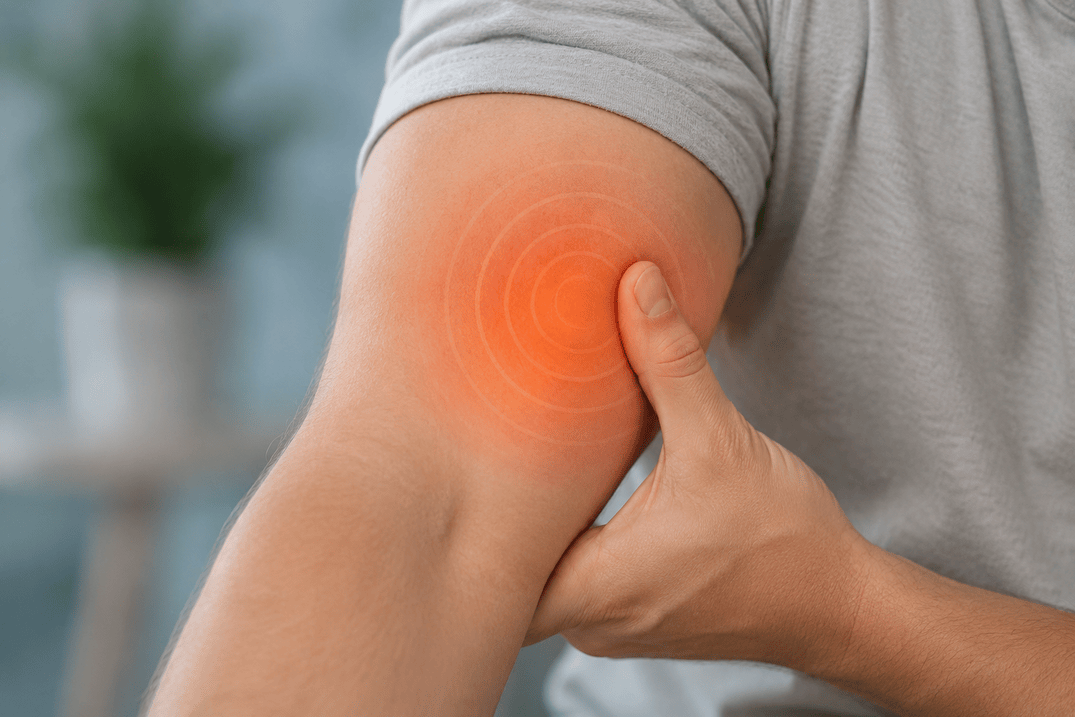
Elbow pain can interfere with gripping, lifting, tools, racquet sport and computer work. At Spine & Strength Chiropractic in Craigieburn, we assess the elbow together with forearm strength, shoulder control, neck movement and nerve function.
Typical Recovery
Often gradual; recovery varies with duration and tendon load
Affected Area
Outer elbow, inner elbow, back of elbow or forearm
Common In
Tradespeople, office workers, racquet athletes, gym-goers and parents
OVERVIEW
Understanding elbow pain
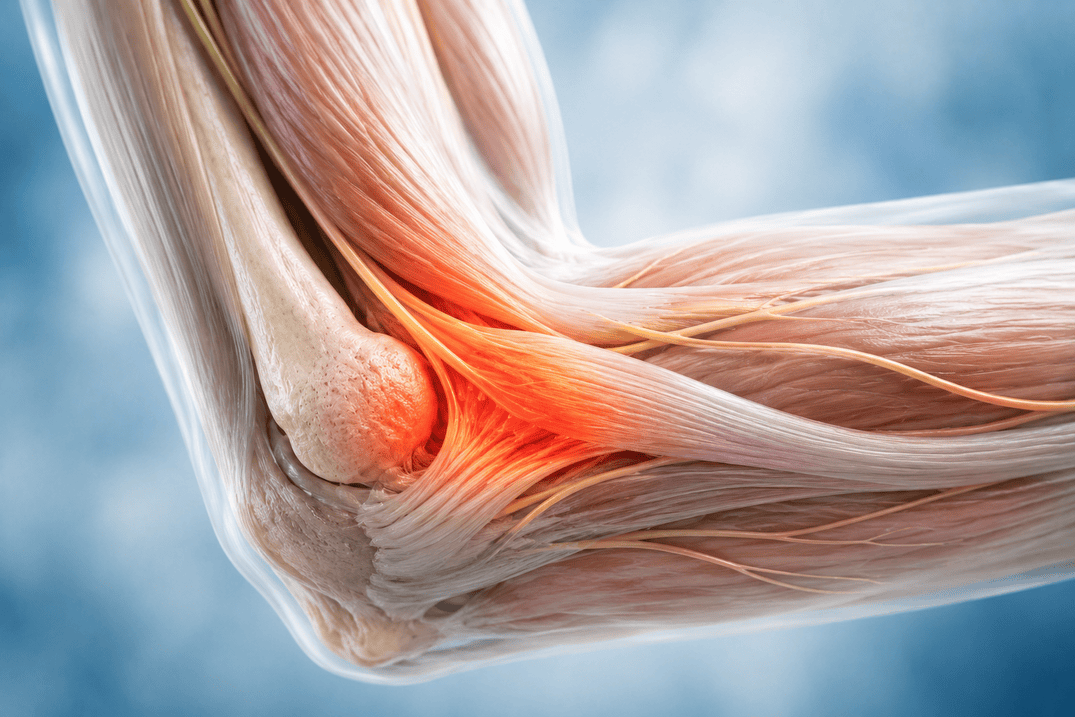
The elbow joins the upper arm and forearm and transfers force during gripping, lifting and pushing. Pain commonly develops around tendons on the outer or inner elbow, but symptoms may also involve the joint, bursa, muscles or nearby nerves. Repeated wrist and grip activity, a sudden workload increase or direct impact can contribute. Because neck or nerve symptoms can mimic elbow pain, broader assessment may be needed.
Neurological and lower-limb movement assessment
Tailored care and progressive rehabilitation
POSSIBLE CONTRIBUTORS
Where symptoms may be coming from
Upper-limb symptoms may involve more than one structure. Assessment considers local tissues, connected joints, nerve pathways, workload and recovery capacity.
Outer Elbow Tendons
The wrist-extensor tendons may become sensitive with gripping, tools, lifting or racquet activity, often described as tennis elbow
Inner Elbow Tendons
The wrist-flexor and forearm tendons may be overloaded by repeated gripping, throwing or pulling.
Elbow Joint & Bursa
Joint irritation, stiffness or swelling at the back of the elbow may follow impact, arthritis or repeated pressure.
Nerves & Neck Referral
The ulnar, radial or median nerve, or a cervical nerve root, can produce pain, tingling or weakness around the elbow and forearm.
WHAT TO WATCH FOR
Symptoms & common causes
Symptoms to look out for
- Pain on the outer or inner elbow during gripping or lifting
- Tenderness around a bony point of the elbow
- Forearm fatigue or reduced grip confidence
- Pain with wrist movement, pushing or pulling
- Tingling into the ring and little fingers or other nerve-like symptoms
Common causes
- Repeated gripping, tools, racquet sport or mouse use
- Sudden increases in gym or manual-work load
- Direct impact or prolonged pressure on the elbow
- Tendon, joint or bursal irritation
- Nerve sensitivity near the elbow or neck
- Less commonly, fracture, infection or inflammatory disease
TREATMENT
How we may support it
At Spine & Strength Chiropractic, Craigieburn, care is matched to examination findings, symptom irritability, health history and the activities that matter to you.
- Hands-on care to relevant joints or soft tissues where clinically appropriate
- Progressive tendon, forearm and grip-strength exercises
- Shoulder and upper-back strengthening where load-sharing is relevant
- Technique and workload guidance for tools, gym, sport and desk tasks
- Referral for imaging, GP review or specialist assessment where indicated
SHOULD YOU GET ASSESSED?
Signs you may benefit from an assessment
- Pain persists despite sensible activity modification
- Grip strength is reducing or daily tasks are increasingly limited
- There is tingling, numbness or hand weakness
- followed a fall, impact or sudden force
- The elbow is markedly swollen, hot, red, locked or deformed
Some symptoms need urgent medical assessment
Call 000 for sudden neurological symptoms such as facial droop, speech difficulty or one-sided weakness. Seek emergency care for saddle numbness, new bladder or bowel dysfunction, rapidly worsening leg weakness, severe trauma, a cold pale limb or pain with major swelling and breathlessness.
YOUR JURNEY
Our 4-step care plan
Your plan is based on symptom behaviour, relevant neurological findings and the movements you need for work, family life and exercise.
Consultation
We discuss grip, lifting, work, sport, tools, keyboard use, injury history and any hand tingling.
Physical Assessment
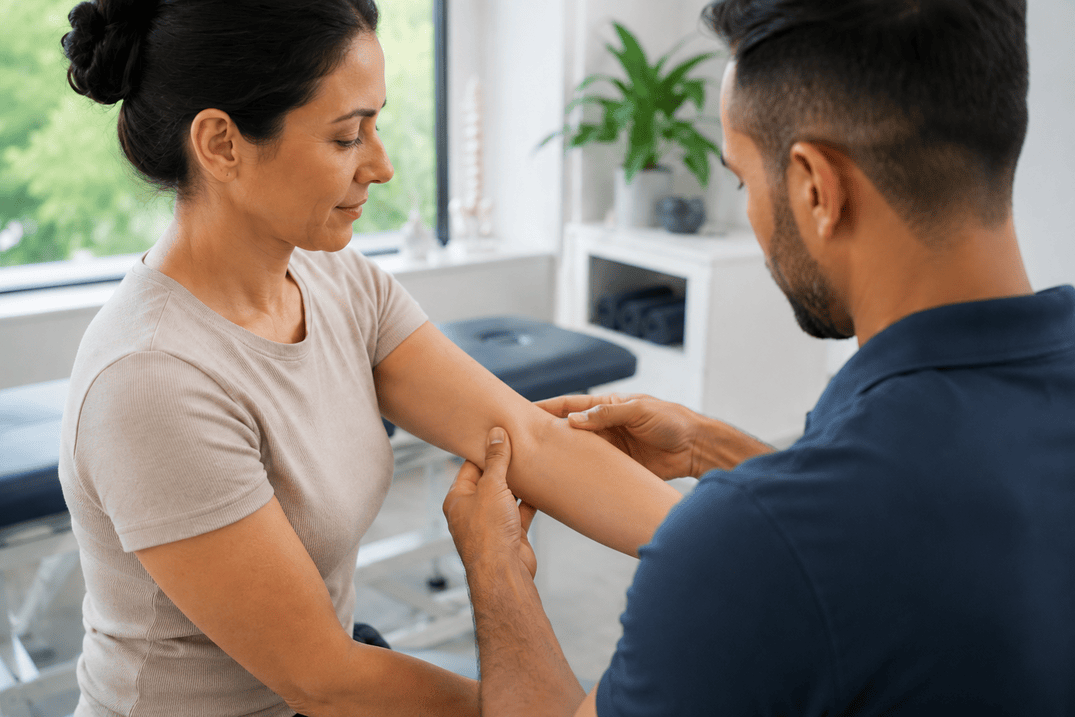
We assess elbow movement, tendon loading, grip, wrist and shoulder function, neck movement and nerve signs.
Findings & Explanation
We explain whether the pattern appears tendon, joint, nerve or referral-related and whether imaging is needed.
Personalised Care Plan
Your plan may combine symptom modification, progressive loading, mobility and return-to-work or sport guidance.
FAQ
Frequently asked questions
Is outer elbow pain always tennis elbow?
No. Tendon pain is common, but joint irritation, radial nerve sensitivity and neck referral can produce similar symptoms.
Why does gripping make my elbow hurt?
Grip activates forearm muscles that attach near the elbow. If their current capacity is exceeded, the tendon region may become sensitive.
Should I wear an elbow brace?
A brace can temporarily reduce load for some people, but it is not suitable for everyone and should accompany a broader strengthening plan.
How long does tendon-related elbow pain take to improve?
Persistent tendon pain often improves gradually rather than overnight. Timeframes depend on duration, workload and the ability to progressively rebuild capacity.
Do I need imaging?
Imaging is not routinely required for typical gradual-onset elbow pain, but may be considered after trauma, locking, major swelling or unusual examination findings.
Book a elbow pain assessment in Craigieburn
Visit Spine & Strength Chiropractic in Craigieburn for a personalised assessment and clear guidance on appropriate care, exercise or referral.